Later projects demonstrated the breadth of the program. The Boeing FB-5 arrived at Gillespie in 2012 as an incomplete tubular-steel fuselage with partial wing structures, ribs, and assorted reproduction parts. The surviving material did not constitute a complete aircraft waiting to be repaired. Volunteers had to reconstruct the Navy fighter from plans, research, and fabricated components. Completed in January 2024 after roughly ten years of work, the FB-5 showed the continuing importance of long-duration projects that could survive changes in personnel, budgets, and institutional priorities.
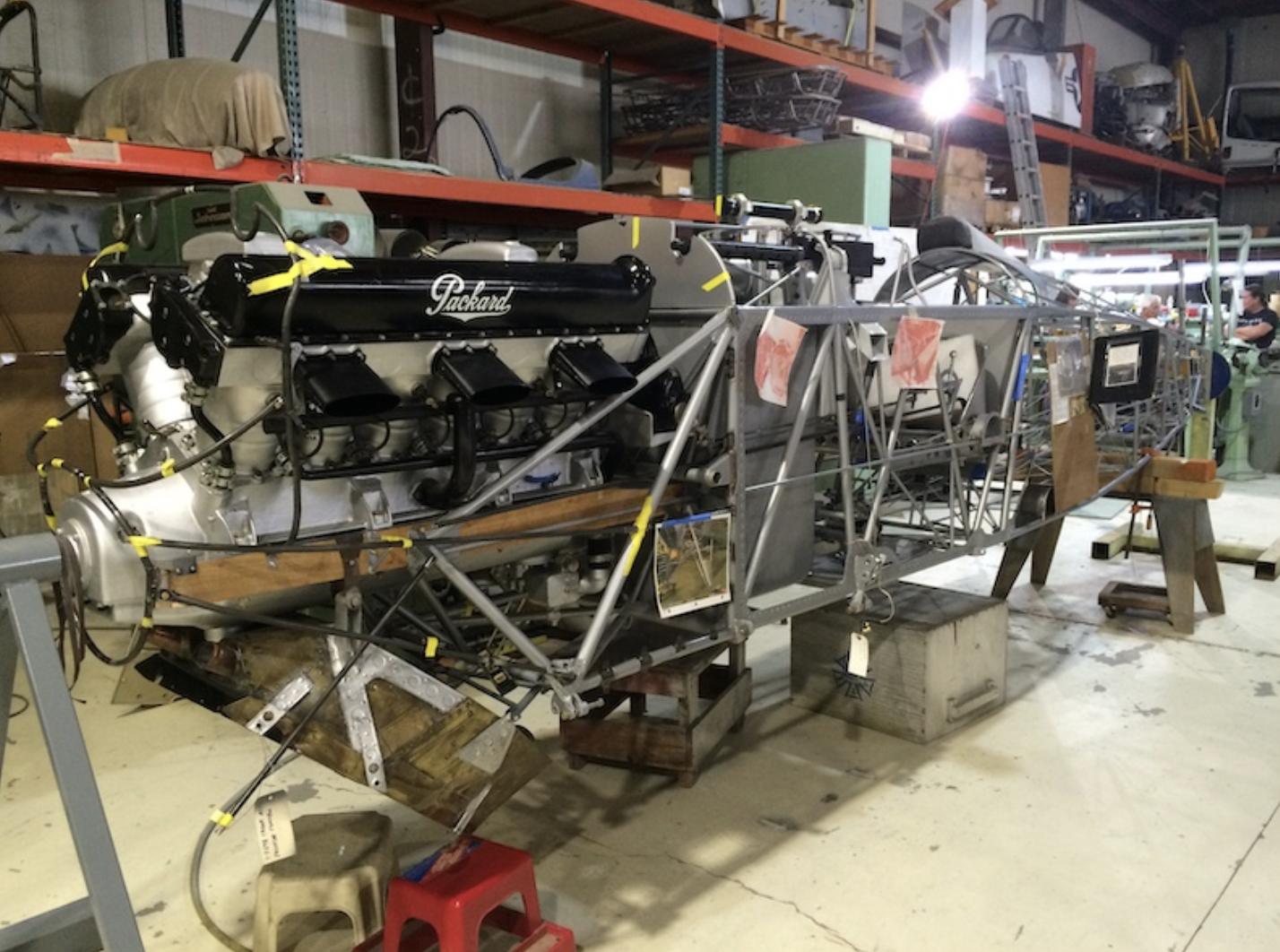

The Boeing FB-5 at Gillespie Field at two stages of its ten-year reconstruction. The comparison shows how volunteers transformed an incomplete fuselage and partial wing structures into a finished display aircraft.
The 1903 Wright Flyer replica also returned to Gillespie after decades on display had taken a toll on its structure. The restoration team disassembled the aircraft, cataloged its components, and repaired its intricate wooden framework. When the Flyer returned to the Museum’s rotunda in 2024, it was deliberately left uncovered rather than recovered with fabric. The open structure allowed visitors to see the complexity of the woodwork and construction normally concealed beneath the finished surfaces of the aircraft. The project demonstrated that restoration does not always mean returning an object to a complete outward appearance; it can also make construction methods and craftsmanship more visible for interpretation.
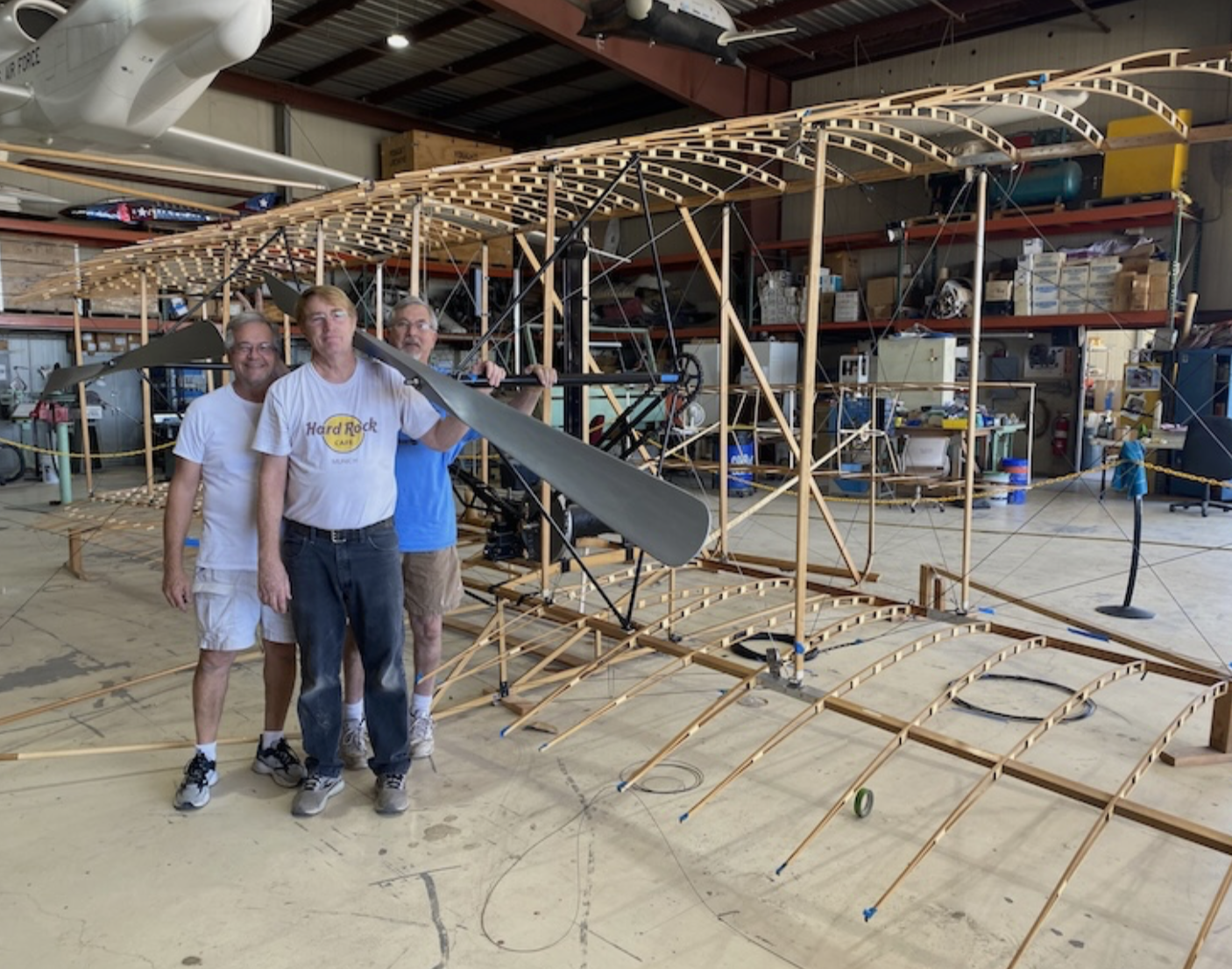
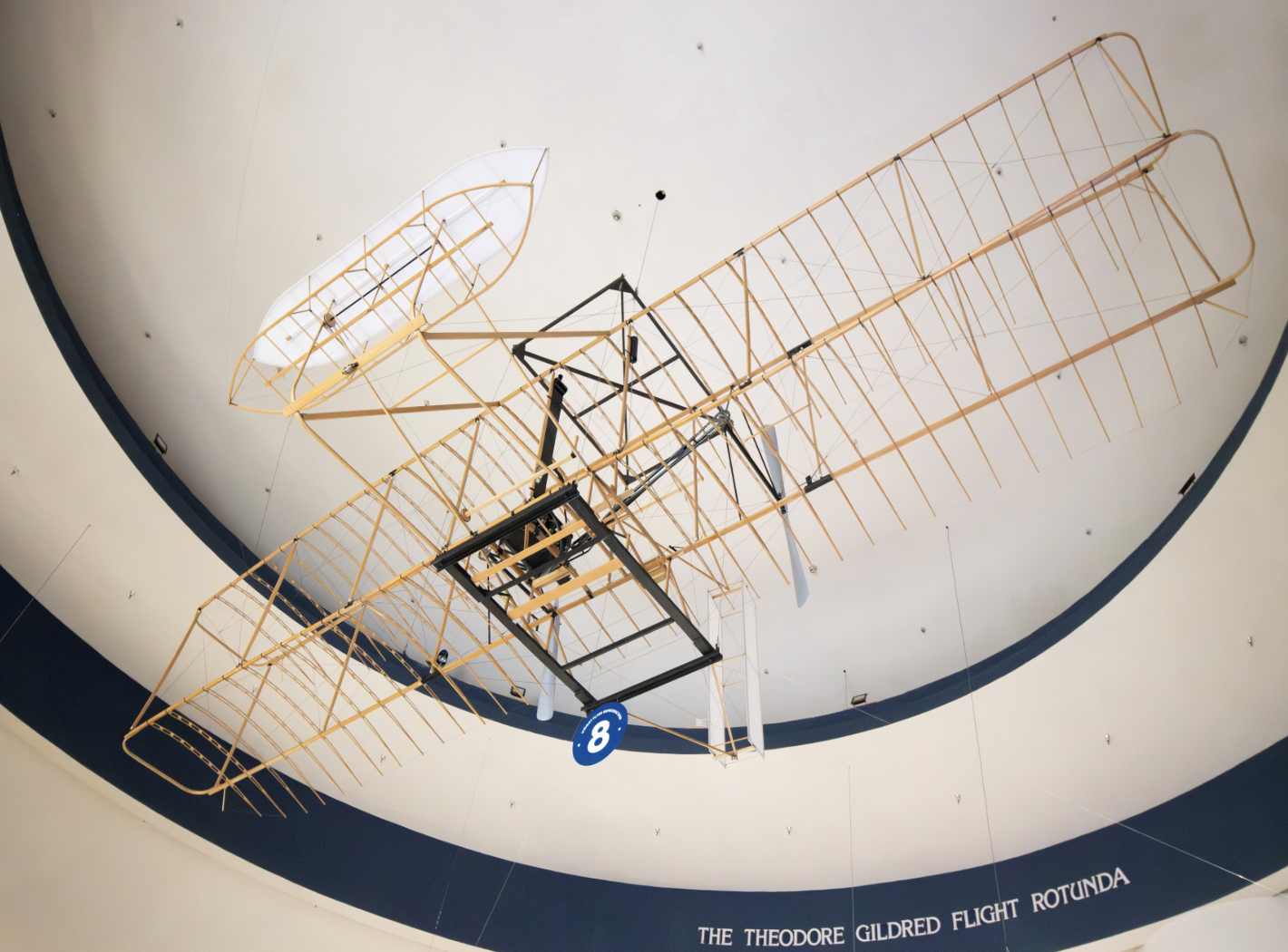
The Wright Flyer hanging in the rotunda...with no fabric covering to show the complexity of its wood structure.
The Beechcraft T-34B Mentor required another form of reconstruction. Two damaged Navy airframes provided the basis for one display aircraft. Combining material from both demanded careful documentation so future staff could understand what belonged to each source and what the Museum fabricated or replaced. The finished configuration was intended to represent the yellow aircraft associated with Naval Air Training Command. Like the FB-5, the T-34B project showed that restoration often begins with fragments and incomplete evidence rather than a single intact machine.
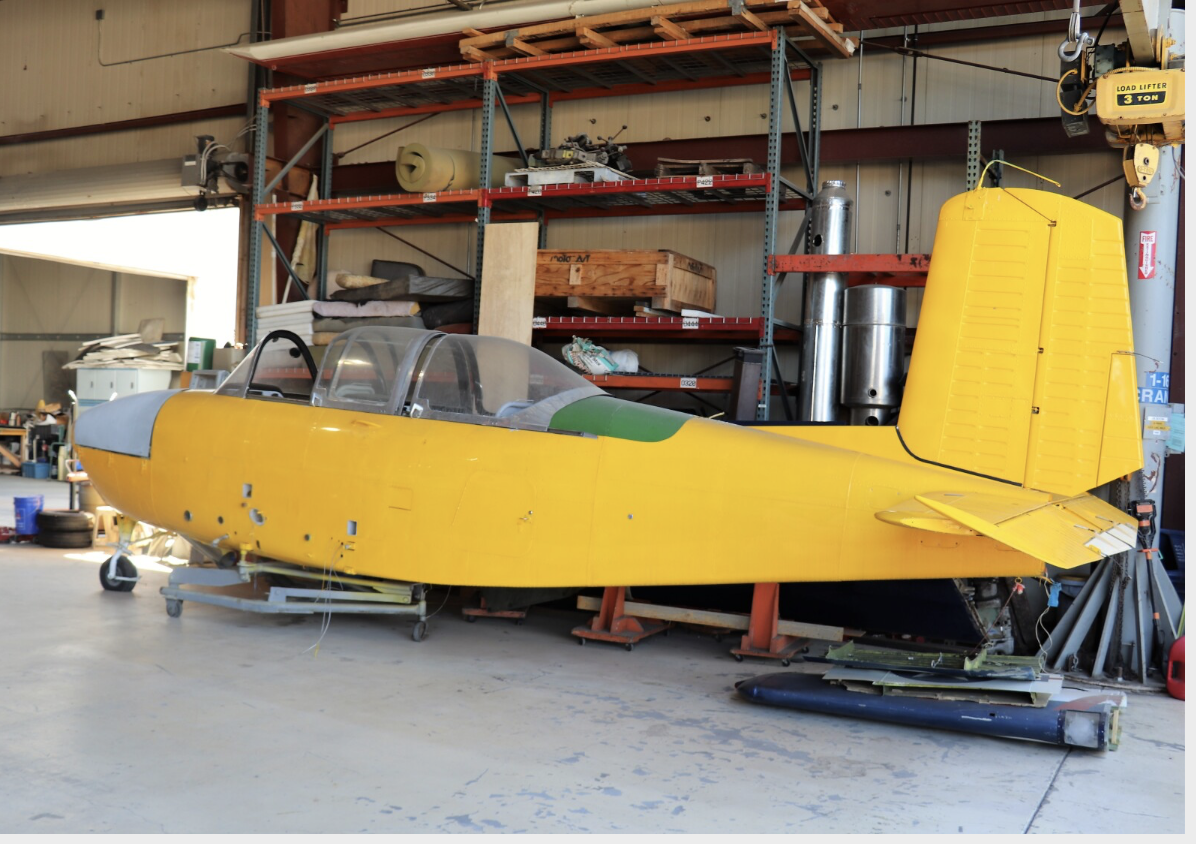
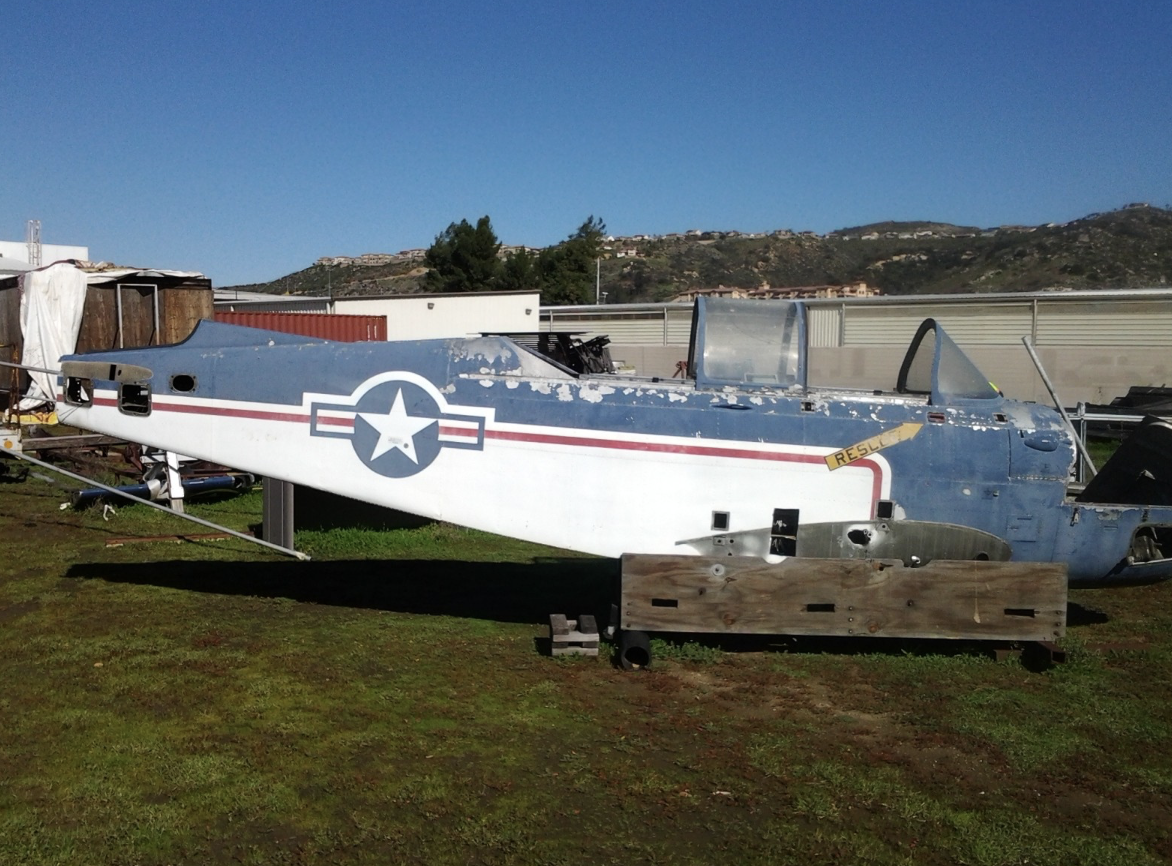
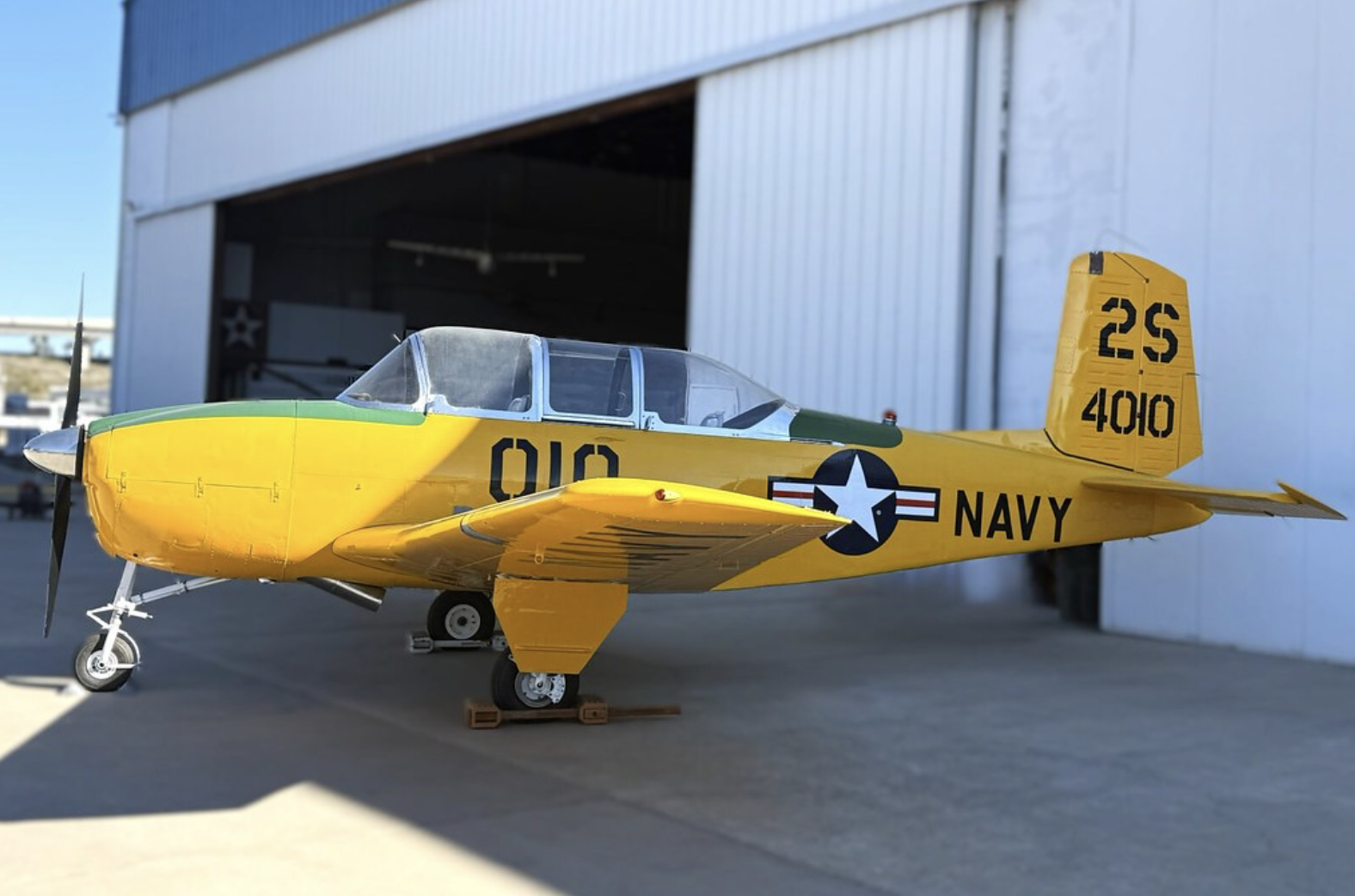
Our Beechcraft T-34B Mentor, when two become one!
Other work remained in progress. The Hungarian MiG-21bis, tail number 9099, required corrosion treatment and structural attention while presenting an interpretive question created by its service across the end of the Cold War. Its markings changed as Hungary moved from the Hungarian People’s Army to the post-communist Hungarian Air Force. The Aeronca L-3 Grasshopper project involved complete disassembly and reconstruction of a light World War II liaison aircraft acquired by the Museum in 2011. Work is also beginning on the Museum’s Curtiss Robin at Gillespie Field, adding another long-term project to the active restoration program. In each case, restoration had to determine which moment in a long service history would guide the finished aircraft.
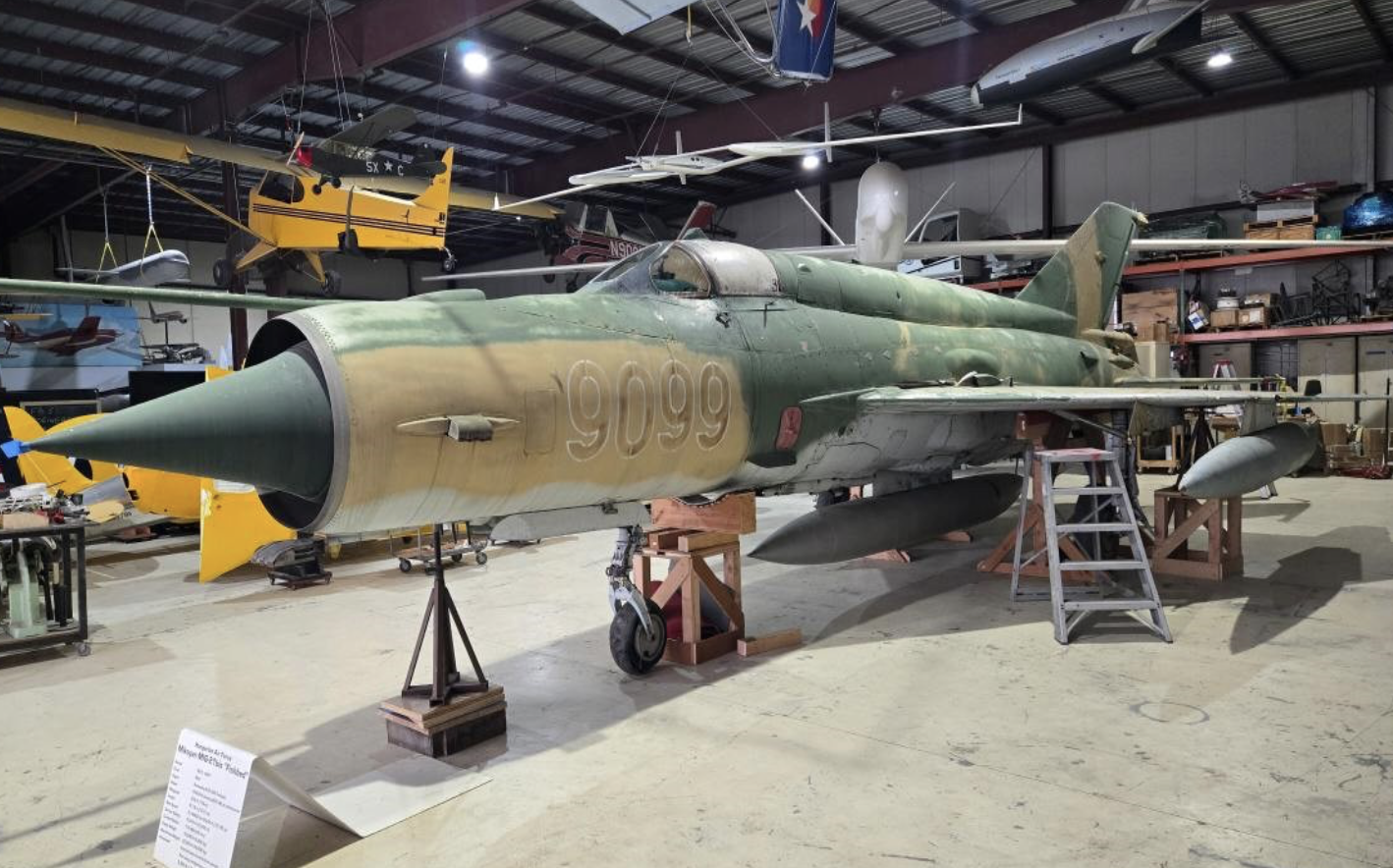
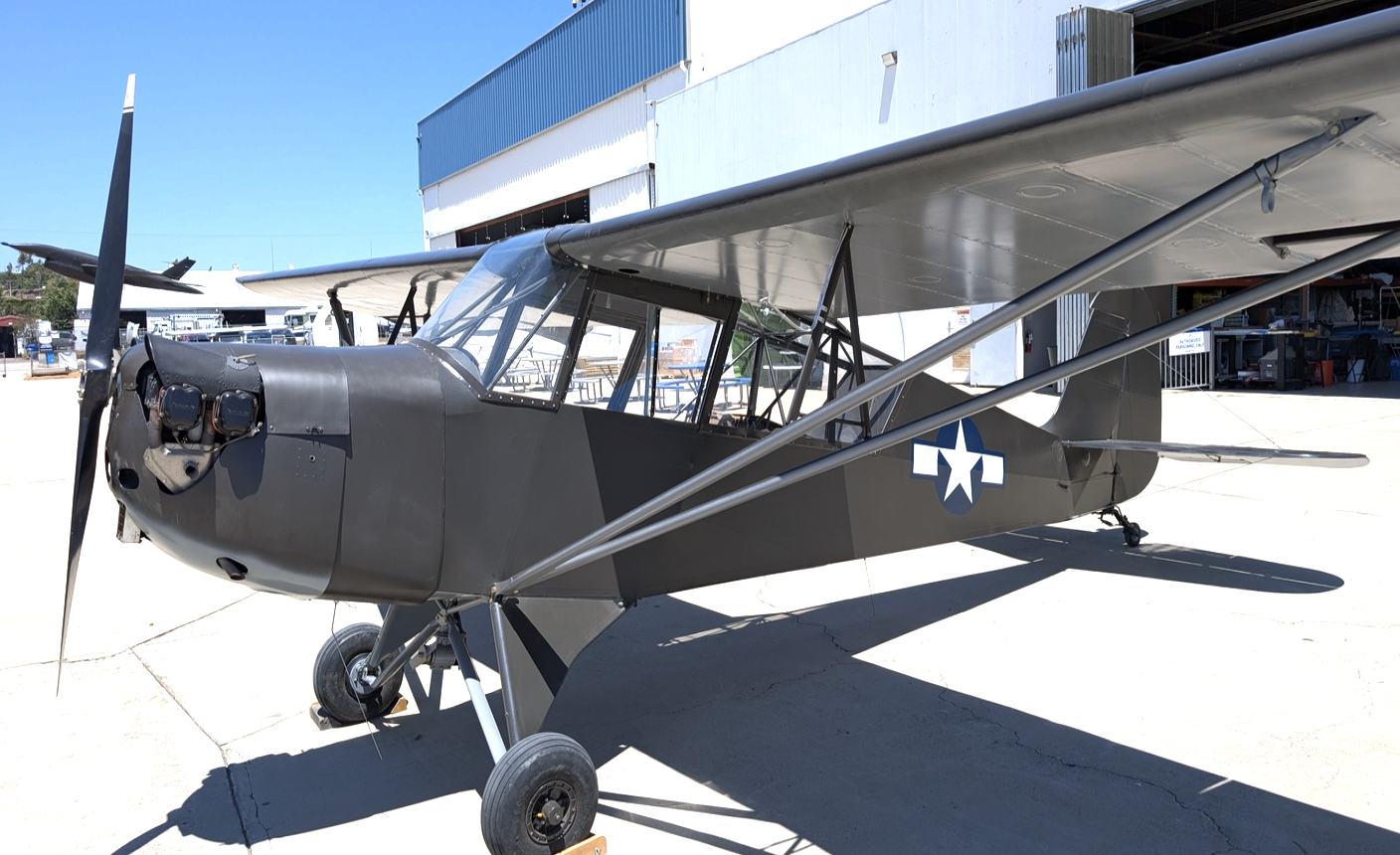

A trio of our recent restoration projects at Gillespie Field.
The Piasecki H-21 known as Holy One carried an unusually personal history. The helicopter became associated with a 1959 rescue mission in Italy and a blessing by Pope John XXIII at the Vatican. After later operation in Canada and acquisition by Classic Rotors, it came to the Museum in 2008 in need of substantial work. By 2026, the first phase of restoration was nearing completion, with the project directed toward the civilian demonstration appearance in which the helicopter had been presented to European dignitaries and World’s Fair visitors. The choice again placed interpretation at the center of the work: the goal was to recover a particular chapter of the aircraft’s life, not merely produce a generic H-21.
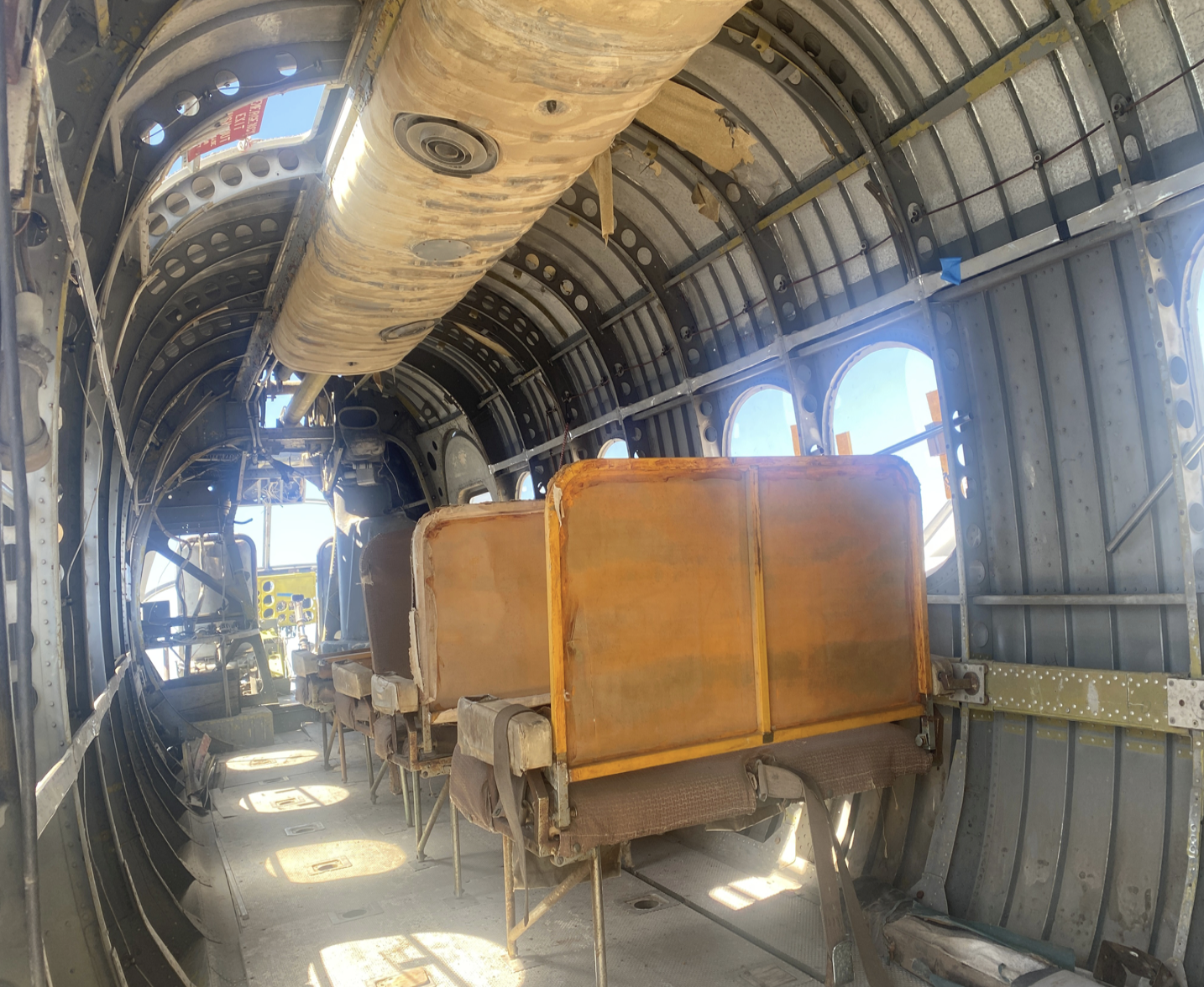
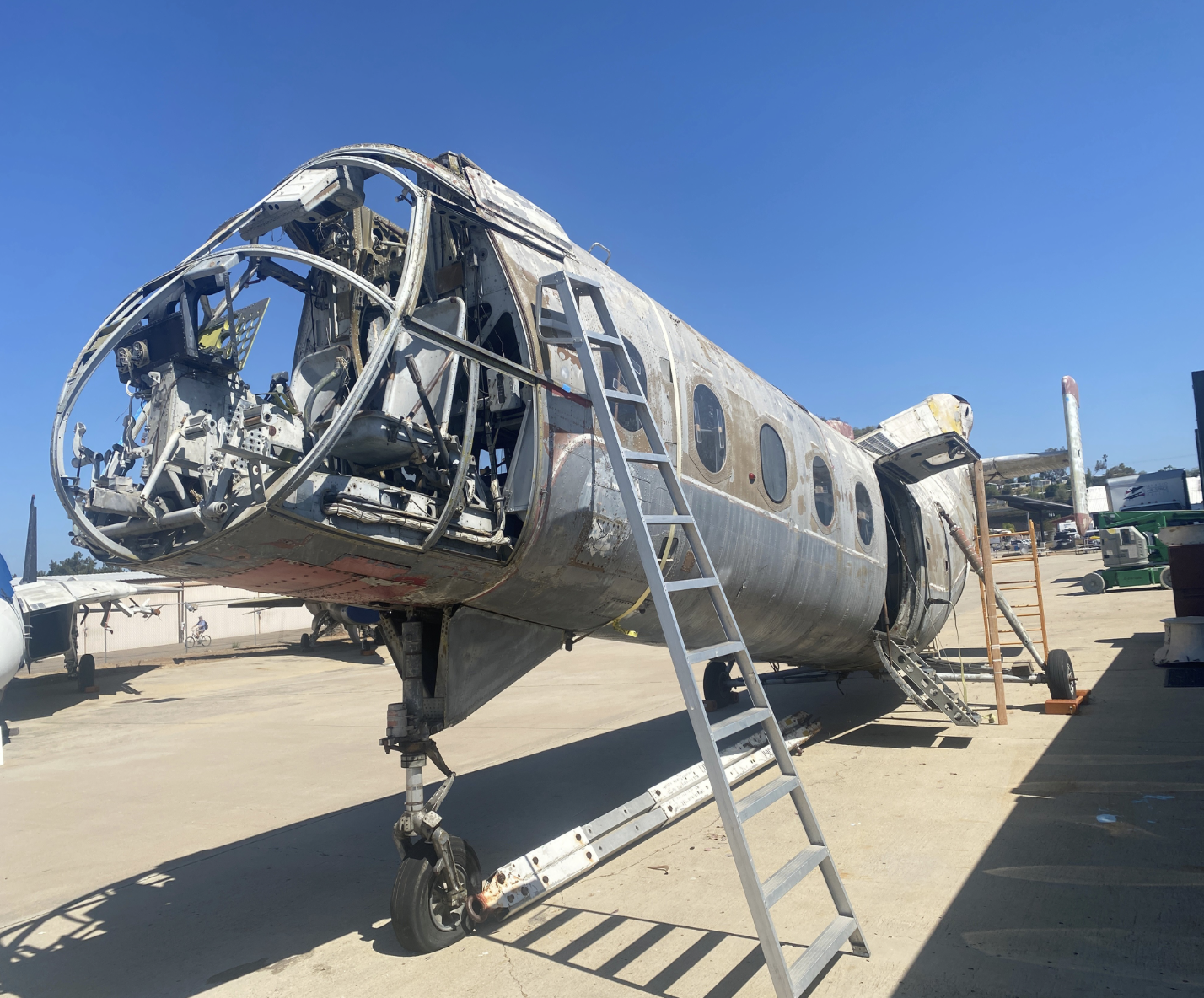
The first phase of work on the Piasecki H-21 Holy One focused on returning the helicopter to the civilian demonstration appearance associated with its 1959 Vatican visit.
The restoration program also continues to look ahead. Projects on the horizon include the Museum’s Bell UH-1, Grumman F-14 Tomcat, and Convair F2Y Sea Dart. Each presents different preservation, research, logistical, and interpretive challenges that will require sustained work by Museum staff and volunteers. These aircraft will extend a restoration tradition shaped by the changing needs of the collection and the Museum’s continuing responsibility to preserve aerospace history.


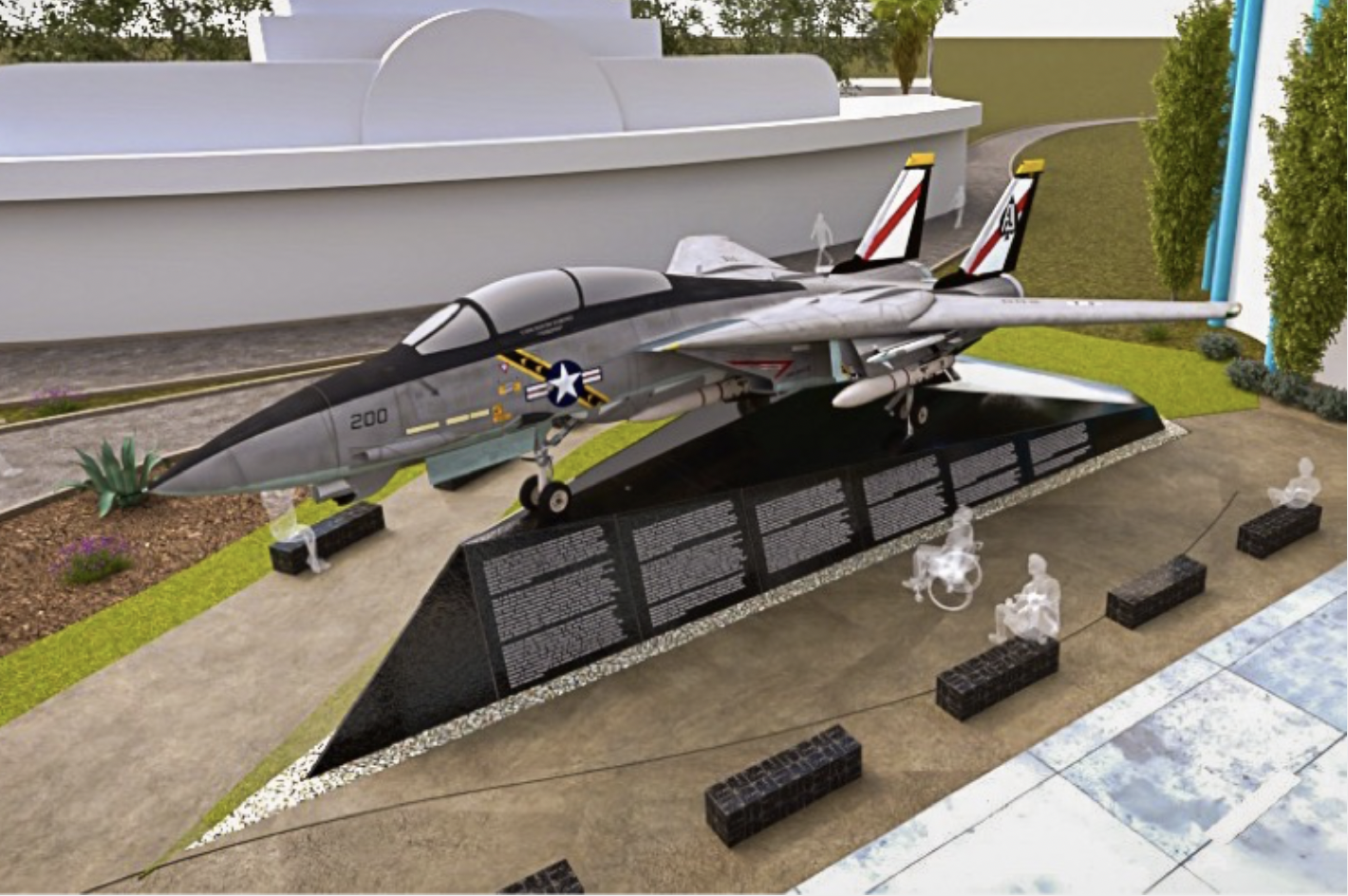
Three of our future restoration projects, our Huey, Sea Dart and F-14. The later is shown as an artitistic concept of what the Tomcat will look like once restored.
Together, these projects show that every restoration produces more than a finished aircraft; it also creates records, decisions, and knowledge that the Museum must preserve.
2001 Pan American Plaza, San Diego, CA
Phone: 619.234.8291
Información En Español
Contact Us
We would like to thank all our sponsors who help us make a difference. Click here to view all who help us.

The San Diego Air & Space Museum is a 501(c)(3) non-profit organization. Federal Tax ID Number 95-2253027.