Viewed across the Museum’s history, these projects show that restoration has done far more than supply aircraft for display. The program helped the Museum rebuild after catastrophe, supported the expansion to Gillespie Field, created partnerships with national institutions, and sustained a community of technical volunteers. It has also preserved forms of knowledge that were disappearing from active aviation: fabric covering, wood construction, sheet-metal forming, radial-engine work, obsolete systems, historic finishes, and the ability to read an aircraft for evidence of earlier changes.
The projects also reveal how restoration practice evolved. Earlier work sometimes emphasized returning an aircraft to a visually complete condition. Later projects increasingly required clearer distinctions among original material, replacement parts, fabricated components, reproductions, modern safety modifications, and interpretive finishes. Photographs taken before, during, and after treatment became evidence. Work logs and research files recorded why a decision had been made. Archives supported the shop, and the shop generated records that would become part of the archives.
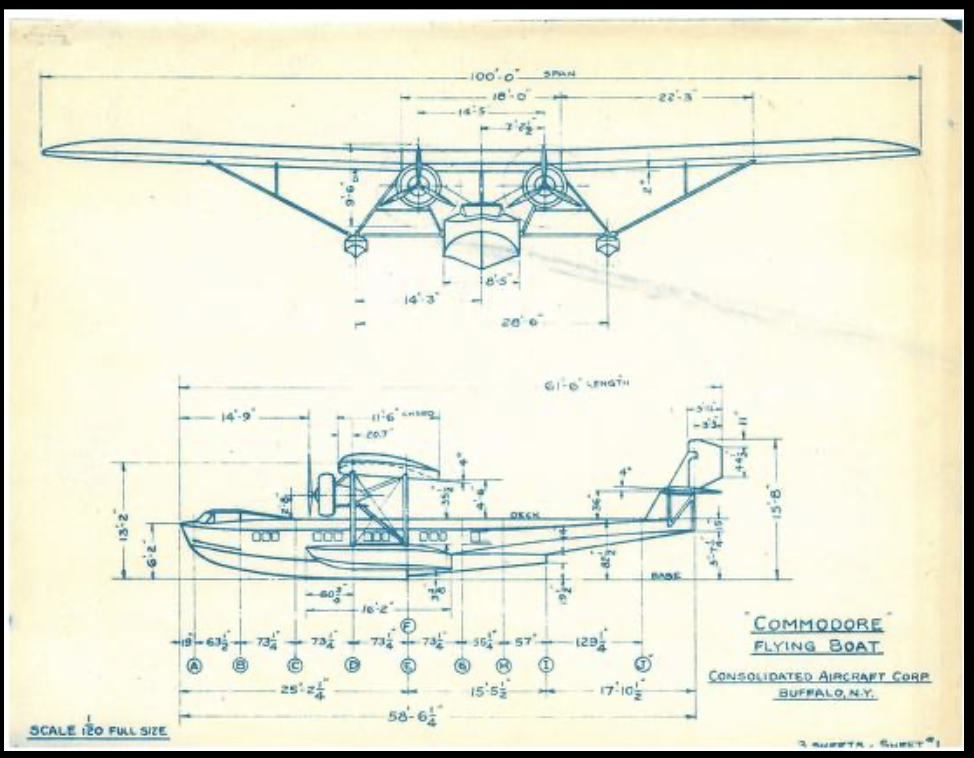
Documents like this one, housed in the Library and Archives, are kept safe for future generations that will be working in our restoration department.
This documentation is now part of the Museum’s institutional history. A finished aircraft cannot, by itself, explain who rebuilt it, which parts survived, what evidence guided the markings, or why one configuration was chosen over another. Those answers remain in project files, drawings, photographs, correspondence, and the memories of restorers. Preserving those records ensures that future staff can evaluate earlier work rather than treating the completed appearance as unquestioned fact. For every major project, the Museum should retain condition documentation, source research, drawings, parts and materials decisions, work logs, photographs, correspondence, approvals, and records of the final configuration.
Every major project therefore added two things to the Museum. One was the aircraft visitors could see. The other was a record of people working through uncertainty, using research and craft to decide how aerospace history should be carried forward. That second legacy is less visible, but it explains why restoration occupies such an important place in the Museum’s own story.
2001 Pan American Plaza, San Diego, CA
Phone: 619.234.8291
Información En Español
Contact Us
We would like to thank all our sponsors who help us make a difference. Click here to view all who help us.

The San Diego Air & Space Museum is a 501(c)(3) non-profit organization. Federal Tax ID Number 95-2253027.