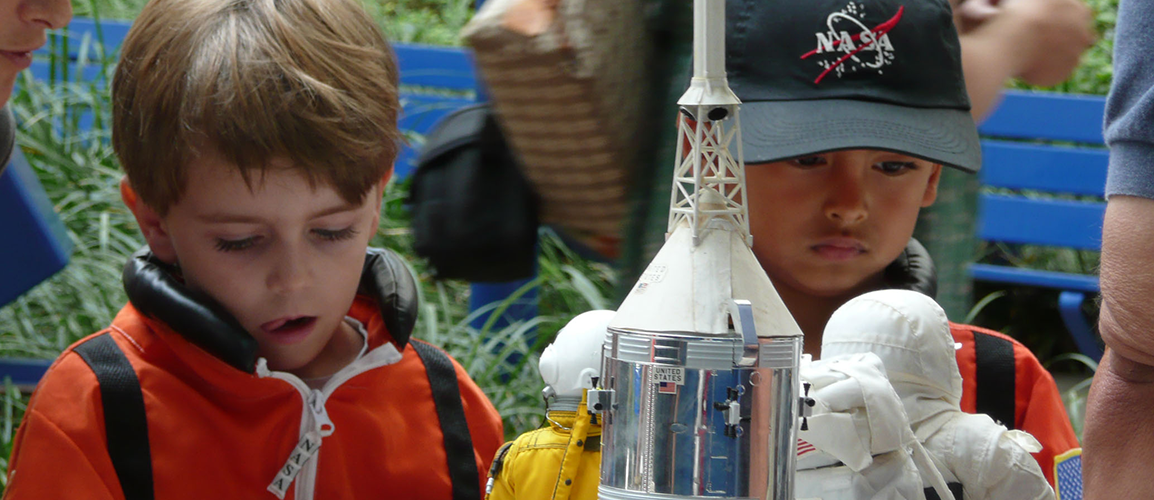
By the late 1930s, aviation already required more than daring pilots and small support crews. It needed trained workers, production systems, engineering departments, inspection standards, suppliers, airfields, and people who understood how to keep increasingly complex aircraft operating. The industry was still far smaller than it would become during WWI, but the work had already begun moving toward the scale and specialization that wartime production would demand.

By 1937, Consolidated Aircraft was already well established in San Diego, and soon would be making preparations for wartime production.
WWII expanded aviation production at a speed that changed the American workforce. Aircraft production became a national priority. Military enlistment removed many men from civilian jobs at the same time that factories needed more workers. Aircraft plants recruited quickly and widely. Women, minorities, migrants, and people from rural and working-class communities entered defense industries in large numbers, even while discrimination and unequal opportunity continued to limit where manycould work and how far they could advance.

Once WWII was in full swing, this image of women working besides men in a facotry setting would become commonplace.
Southern California became one of the clearest examples of this transformation. Consolidated Vultee, later Convair, Douglas Aircraft, Lockheed, Ryan Aeronautical, Rohr, and other manufacturers expanded under wartime demand. San Diego and the larger region drew workers from across the country. People came for jobs, wages, military service, training, and the possibility of stability during a period still shaped by the Great Depression and then by war.

San Diego's Consolidated factory is hidden below camoflague during the early days of WWII.
Other regions experienced similar pressure. Seattle, Wichita, Long Beach, Burbank, Fort Worth, Dayton, Buffalo, Marietta, and other aircraft and defense centers drew workers into factories, training fields, military facilities, and supplier plants. Some cities already had industrial experience. Others had to absorb rapid growth before housing, transportation, schools, and public services were ready. Wartime aviation was not only a production story. It was a movement of people into places that had to change quickly.

Boeing in Seattle also worked to hide their factory from a possible enemy attack.
Factories operated under constant pressure. Aircraft production required speed, but it also required precision. Riveting crews worked inside loud, crowded facilities. Machinists shaped parts to exact tolerances. Inspectors checked work that would later be tested in combat conditions. Draftsmen revised drawings as designs changed. Engineers responded to military needs, production problems, and technical limits. Clerks, supervisors, schedulers, and supply workers helped keep material moving through factory operations that were growing larger and more complicated by the month.
For many workers, aerospace employment changed the shape of daily life as much as it changed the national war effort. A job in an aircraft plant did not only mean learning a new task. It meant entering a workplace governed by production schedules, inspections, trainingc requirements, material shortages, shift changes, and the constant knowledge that the finished aircraft would eventually leave the factory for war.

A bigger work force meant a bigger administration to oversee the workers...and Consilidated constructed a new building as a bastion of oversight.
The workday could begin before sunrise or end long after dark. Plants operating around the clock required workers to adjust sleep, meals, transportation, childcare, and family responsibilities around rotating shifts. A person might live in a crowded room, share housing with relatives or strangers, ride a bus to the plant, stand for hours in a noisy shop, and return home knowing that the same factory would continue working after they left. The war effort did not pause when one shift ended. Another group took its place, and the city around the plant had to adjust with it. That schedule affected families as well as workers. Women who entered production often carried responsibilities at home while learning industrial work that required precision and endurance. Families newly arrived in defense cities had to find housing in crowded markets, manage rationing, enroll children in schools, arrange transportation, and build routines in communities that were changing quickly. Military families faced their own instability as service, training, deployment, and relocation pulled households into the larger machinery of war. Public housing and defense housing projects followed that strain. They did not appear because communities had planned carefully for growth. They were often built because the growth had already arrived. These developments provided housing for workers and families, but they also required roads, water, sewer lines, schools, stores, transportation, recreation spaces, and public services. A housing project was not just a place to sleep. It became part of a larger reorganization of the city.

To house their new workforce, Consolidted built communiies, like this one in Kearney Mesa.
Training was part of that transformation. Aircraft production required people who could read instructions, use tools, follow specifications, and understand that small details mattered. Some workers arrived with mechanical or industrial experience. Others had to be taught quickly because the demand for labor was too urgent to wait for a fully trained workforce. Training programs, supervisors, experienced workers, and on-the-job repetition helped turn new employees into riveters, assemblers, inspectors, and machine operators. The work created pride, but it also created pressure. Workers understood that aircraft were not symbolic objects while they were being built. They were machines intended for use by pilots and crews whose lives could depend on the quality of the work. A loose rivet, a flawed part, a missed inspection, or a misunderstood instruction could matter later. Wartime production required speed, but speed could not replace responsibility. At Consolidated Aircraft in San Diego, Reuben H. Fleet’s slogan, “Nothing short of right is right,” made that expectation visible. Painted across the factory building, the phrase reminded workers that aircraft production depended on precision as much as output.
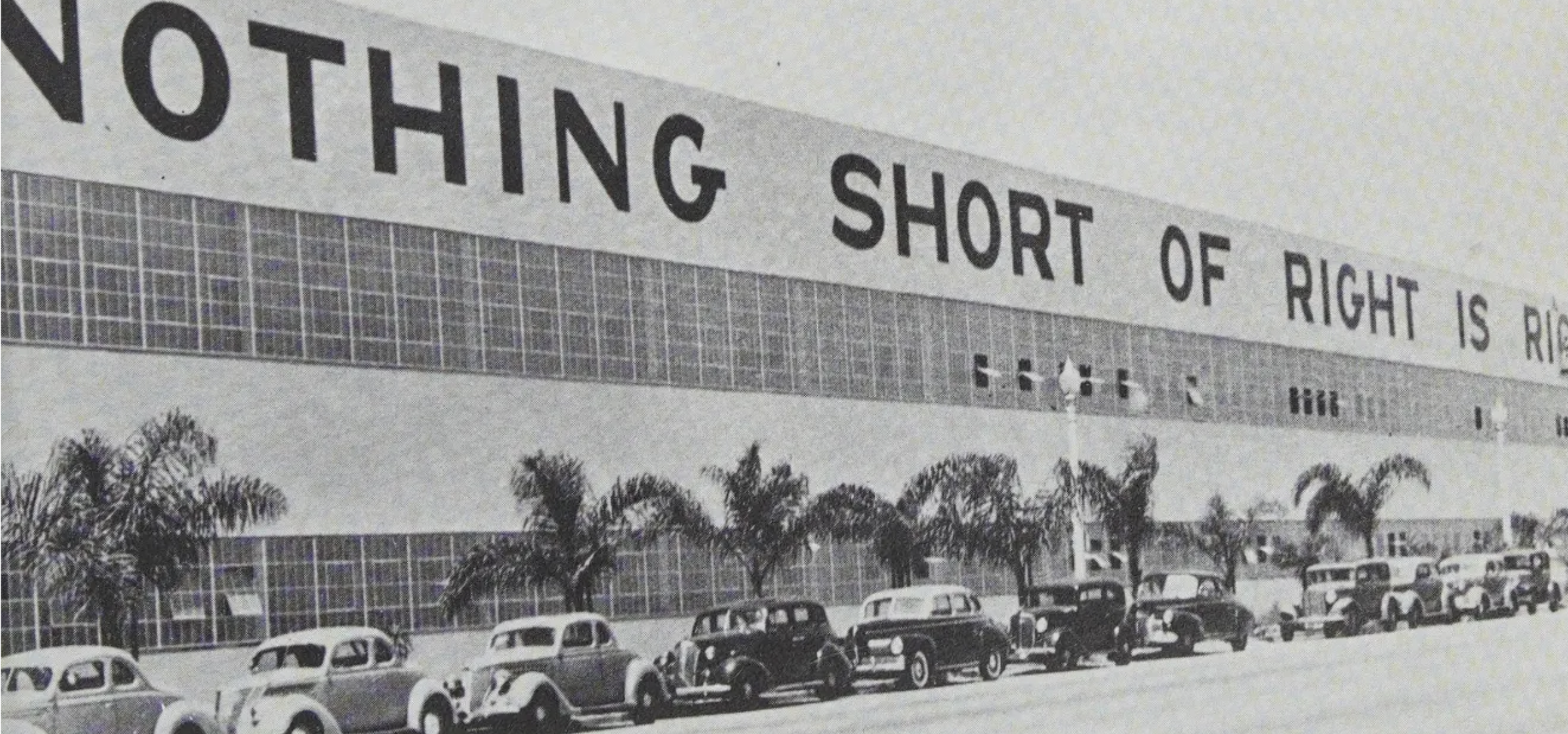
Fleet's famous slogan.
This is one reason factory photographs are so important and so incomplete at the same time. They show scale, machinery, workers, slogans, and national purpose, but they cannot fully show the fatigue of standing through a shift, the anxiety of keeping up with production goals, the strain of learning unfamiliar work, or the complicated pride of knowing that ordinary labor had become tied to a global war. The image preserves the moment. The fuller history has to recover the conditions around it.

Lindbergh field was a model of efficieny, once Ryan built a plane, it was rolled right out to the airport for cadets to train in it.
The work was physical and repetitive, but it was not simple. A small error could matter once an aircraft left the factory floor. Production changes could occur while aircraft were already moving through assembly. Workers had to adjust to new procedures, modified designs, shortages, and schedule pressure. The patriotic image of wartime production can make the work appear unified and orderly. The daily reality involved fatigue, noise, supervision, accidents, and constant adaptation. Women entered aircraft production in visible numbers during the war. They worked as riveters, assemblers, inspectors, electricians, mechanics, draftsmen, clerks, and in other roles needed to keep factories operating.
The later image of “Rosie the Riveter” became a national symbol, but the symbol can flatten the experience. Women were not only standing in for men temporarily. They were learning technical skills, supporting households, adapting to industrial schedules, and proving their ability inside workspaces that had often excluded them. Women also served in operational aviation roles. The Women Airforce Service Pilots ferried aircraft between factories, military bases, and training locations. They flew military aircraft under demanding conditions and freed male pilots for combat assignments overseas. Their work placed women directly inside wartime aviation operations, yet the WASP served as civilians during the war and did not receive veteran status until 1977. Public recognition came slowly, long after their wartime service had ended.

The poster that made Rosie a cultural icon.
Minority workers and service members also contributed across aviation and defense industries while facing discrimination in hiring, training, promotion, housing, pay, and public recognition. African American, Mexican American, Native American, immigrant, and other minority communities worked in manufacturing, transportation, logistics, military service, engineering support, and other fields connected to aerospace growth. Their participation was essential, but access to skilled positions and advancement remained unequal. That inequality shaped the work itself. A person could be needed by the war effort and still be limited by segregation, exclusion, or assumptions about who belonged in technical positions. Workers could help build aircraft for national defense while struggling to find fair housing near the factories that needed them. Service members could support aviation and military operations while still fighting for recognition within institutions that did not treat them equally. Aerospace opened doors for some workers while keeping barriers in place for others. Wartime demand created opportunity, but it did not erase discrimination. A complete account has to hold both realities together.
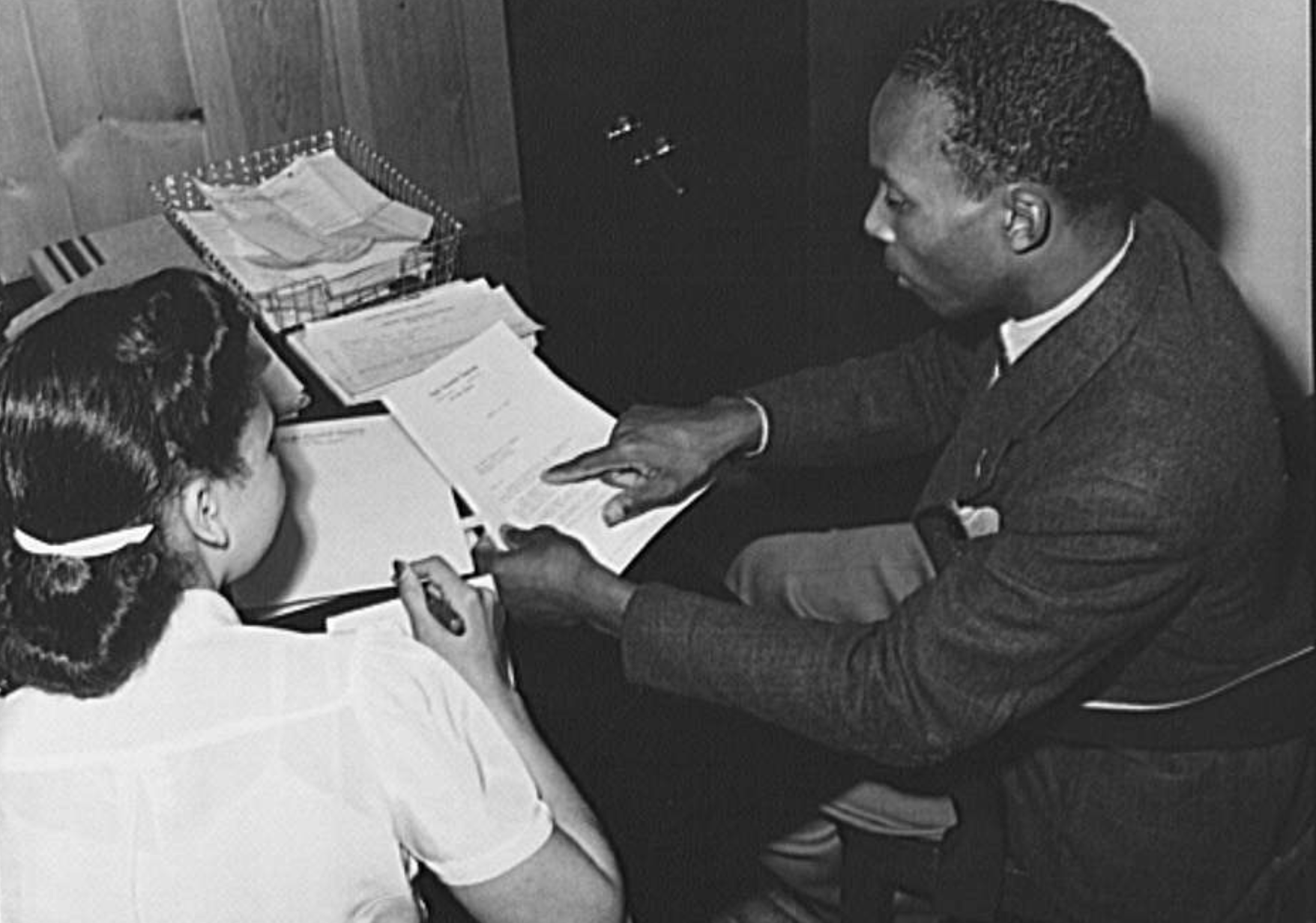
San Diego had a rare all minority owned and operated war time company: Skippy Smith's Pacific Parachute Company.
The growth of aerospace also reshaped family life and communities. Workers relocated for jobs. Military families moved between bases. New housing developments appeared near factories and defense installations. Roads, schools, stores, churches, buses, childcare centers, and publiccservices strained under population growth. Communities that had once developed around ports, farms, rail lines, or older industries became tied to aircraft production and military planning. Aerospace did not only change employment. It changed where people lived, how they moved through a city, and what daily life required.

Compare this image of Lindbergh field taken in 1941 to the one below.
The twenty-four-hour factory changed the community around it. If plants operated through day, swing, and night shifts, then ordinary routines had to adjust. Workers needed buses before dawn and late at night. Cafeterias, lunch counters, diners, grocery stores, and small businesses served people whose meals no longer fit older schedules. Streets filled and emptied according to shift changes. Parking lots, bus stops, boarding houses, and neighborhoods followed the clock of production rather than the older pattern of a daytime workday. Childcare became part of the war effort because production depended on workers being able to show up for shifts. When mothers worked early, late, or irregular hours, ordinary family arrangements were not always enough. Some children were watched by relatives, neighbors, older siblings, or organized wartime childcare programs. In crowded defense cities, the need for care did not follow older assumptions about who would be home during the day. The factory schedule reached into kitchens, bedrooms, schools, and nurseries. Schools also felt the change. New children arrived with families who had moved for war work, military service, or training. Classrooms, playgrounds, supplies, and teachers had to absorb population growth that had not been gradual. Local governments faced the same pressure in water, sewer systems, police, fire protection, public health, roads, and transit. The factory may have been the reason people came, but the whole community had to absorb the change.

Lindbergh field in 1945, with a much expanded runway.
The consequences lasted beyond the emergency itself. Roads, utilities, housing projects, schools, and industrial districts built or expanded for wartime demand did not disappear when production slowed. Some workers left when contracts ended, but others stayed and made permanent lives in cities they had first entered for war work. Aircraft plants, military bases, supplier networks, and skilled labor pools gave many regions a new economic identity. Wartime aviation did not only produce aircraft. It left behind cities and communities reorganized around aerospace.
2001 Pan American Plaza, San Diego, CA
Phone: 619.234.8291
Información En Español
Contact Us
We would like to thank all our sponsors who help us make a difference. Click here to view all who help us.

The San Diego Air & Space Museum is a 501(c)(3) non-profit organization. Federal Tax ID Number 95-2253027.