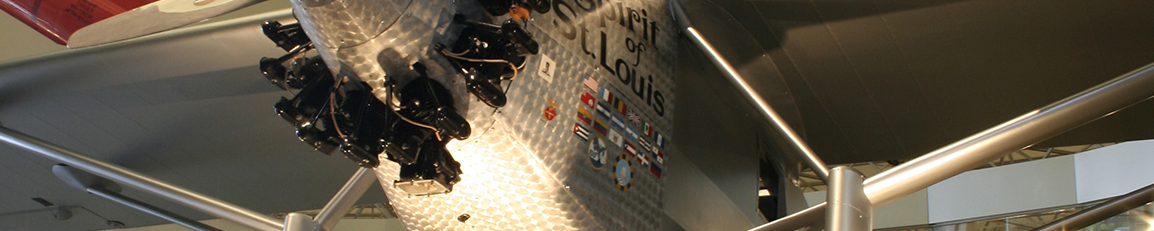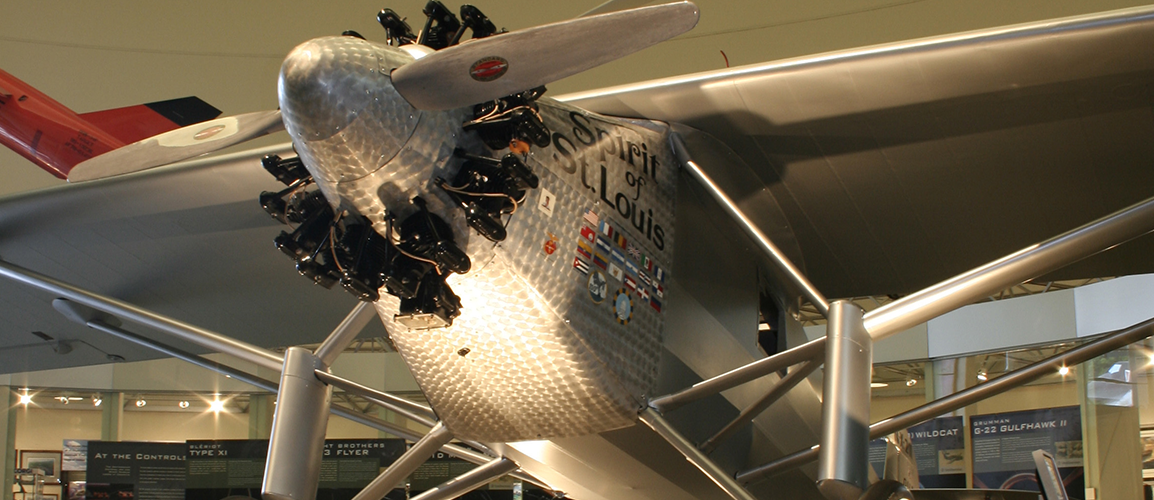

After the Ryan M-1 became obsolete, the Company concentrated on the manufacture of the Ryan Brougham, a commercial version of the Spirit of St. Louis. The Ryan Brougham model B-5 was a high-wing cabin monoplane with ample room and comfort for six, and was powered with a 300 hp Wright J6 series engine. Neat and trim with good proportion, the B-5 was a deft and capable airplane with a sprightly performance. Fully loaded with six people and 100 gallons of fuel, take-off was accomplished in less than 300 feet, and a climb-out to 1,000 feet was completed in one minute and 35 seconds. The B-5 Brougham went into regular production in March 1929.
The aircraft was also approved with twin-float seaplane gear; the switch from land to sea could be made in less than four hours. The type certificate number for the Ryan Brougham B-5, as powered by the Wright J6 engine, was issued in June of 1929 for both a landplane and a seaplane version. Sixty-one were manufactured by the Ryan Aircraft Corporation of St. Louis, Missouri.
For flight from San Diego to Ecuador, Theodore Gildred Senior purchased the sister ship to the Brougham on display in the San Diego Air & Space Museum’s Golden Age of Flight Gallery just prior to his history-making flight. He selected flight instructor Dean Farran as his copilot, and left San Diego at dawn, March 13, 1931. In the next eighteen days of his goodwill flight, Gildred set down thirteen times, completing the trip through Mexico, Guatemala, Nicaragua, Costa Rica, Panama, and Ecuador.

He arrived at his final destination in Ecuador at 10:35 a.m. on March 31, 1931, before a welcoming crowd of 15,000 people. The Ecuadorian government awarded him its Gold Medal of Honor and feted Gildred and Farran at a state reception. Following that flight, Gildred sold his Brougham to the government of Ecuador, where it was used as the country’s first air mail plane.
Fifty years later, on March 13, 1981, Theodore “Ted” Gildred Jr. took off from Lindbergh Field to recreate his father’s famous flight. The airplane was called the Ecuador II and it landed at precisely 10:52 a.m. on March 31, 1981 at Mariscal Sucre International Airport in Quito, Ecuador. He left the aircraft there with permission of its owner, the San Diego Aerospace Museum, where Gildred Jr. was a board member, to start a new aviation museum in Ecuador. Seventy-five years after the original flight, a Pilatus PC-12 named Ecaudor III touched down at 10:52 a.m., March 31, 2006 in Quito. That was right on schedule for AOPA member Ambassador Theodore Gildred Jr. and his crew, comprised of his two sons Ted and Steven, and Erik Lindbergh, the grandson of Charles Lindbergh who was the inspiration behind the original flight. Gildred Jr.’s sons have pledged to repeat the flight in 2031 on the flight’s 100th anniversary.
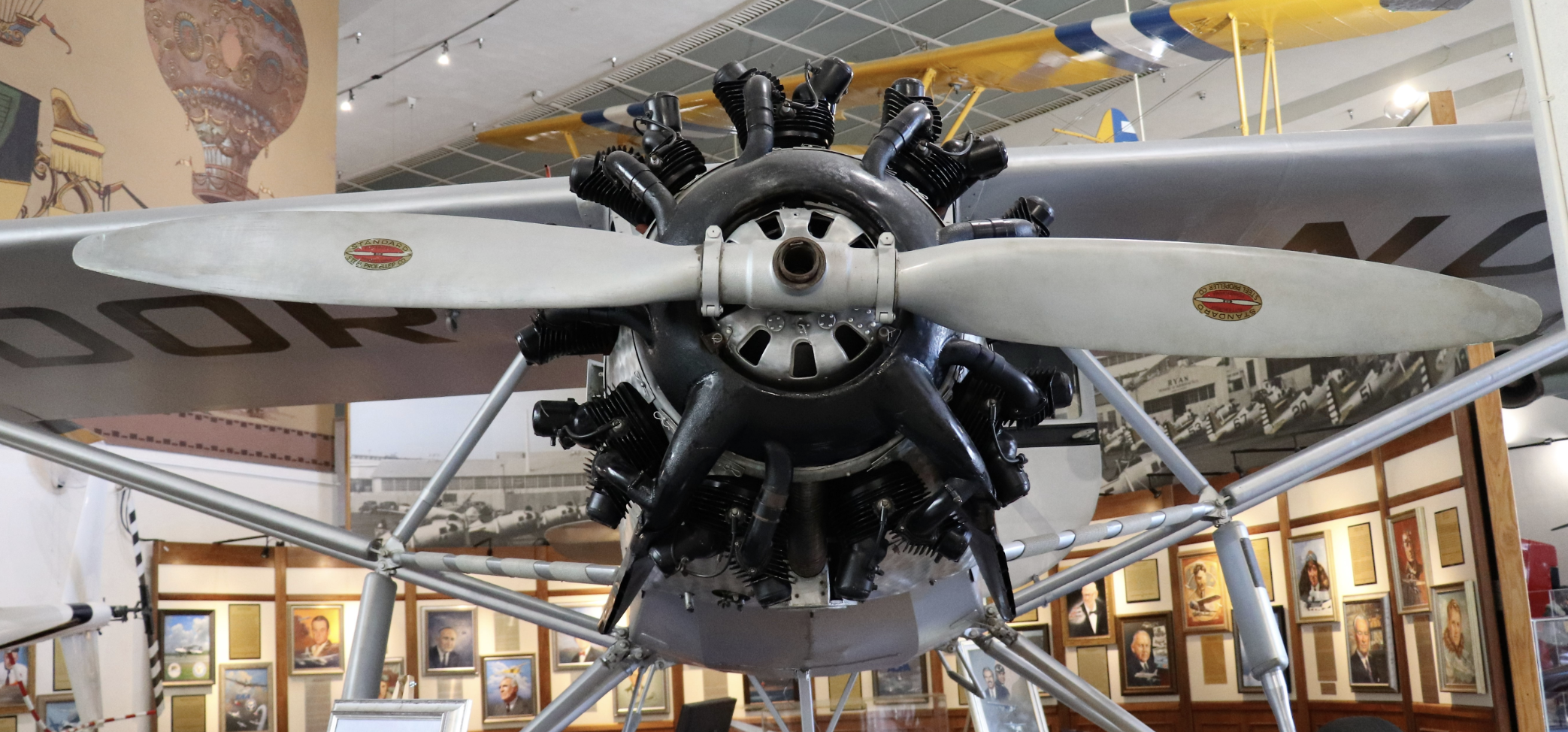
The Museum’s aircraft is an original built in 1931. It has been painted like its sister ship, the Ecuador, with NC731M registration number, which was flown from San Diego to Quito, Ecuador in 1931. In 1980, the Museum’s aircraft was completely restored by volunteers to like new condition in celebration of the 50th anniversary of the flight to Ecuador by Theodore Gildred, Sr. The aircraft was donated to the Museum by the South Shore Bank.
2001 Pan American Plaza, San Diego, CA
Phone: 619.234.8291
Información En Español
Contact Us
We would like to thank all our sponsors who help us make a difference. Click here to view all who help us.

The San Diego Air & Space Museum is a 501(c)(3) non-profit organization. Federal Tax ID Number 95-2253027.